Sunday, 31 July 2011

62. Berlin Alexanderplatz

Not counting arthouse nonsense this is the longest film ever made, at least according to Wikipedia, but calling it a film is really a bit of a cheat. It's over 15 hours long, is very episodic and was never intended to be shown on anything other than a television. In fact, one of the special features on the DVD box set tells the story of the restoration and how there were problems because it wasn't shot on the right sort of film stock for high definition viewing. It was only going to be watched on crappy 80s CRTs, so why go to the extra expense? To be fair, it was shown theatrically in America and it's undoubtedly cinematic in its scope and execution, but a little piece of me does wonder if this is a case of the cinema appropriating Berlin Alexanderplatz as its own simply because it's so good. If it had been terrible or merely average would we really see it in the list of long films linked above?

In case anyone's balking at the thought of sitting down to watch a 15 hour movie, though, don't worry. It's neatly divided into 14 episodes, most of which are a manageable hour in length. Overall it tells the story of Franz Biberkopf, a jovial tubby chap trying to make ends meet in 1928 Berlin. He likes a drink, is a little eccentric at times and is a hit with the ladies. Oh, and he's also fresh out of prison for brutally beating his girlfriend to death — you could say he's fairly complex. He's played by Günter Lamprecht (who was also in Das Boot so he must have a thing for great 80s German TV series) and it's an astonishing performance in what is an incredibly difficult role. He's rarely off screen and has to convey such a disparate range of emotions, from good-natured joking around to intense and disturbing acts of violence. He philosophises about life and love and his place in the world; he sings and hums the tunes of the period; he drinks himself into oblivion; he talks to himself and, in one brilliantly bizarre scene, he talks to his pint of beer. It's a whole career of roles all crammed into a single performance.


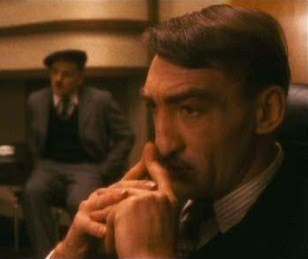
Surrounding Biberkopf are dozens of supporting characters, some of whom emerge from the Berlin undergrowth for an episode or two and then slink back; others stick around longer. He has numerous women in his life and it's really fascinating to dissect what exactly they see in him — he is, after all, a charming and lovable bloke despite the somewhat darker side. His male friends include Meck, a dour but loyal chap who tries to keep Franz grounded in reality, and Reinhold with whom he develops a strange and complex relationship. Gottfried John (also a Bond villain) is equally brilliant as Reinhold and his central pairing with Lamprecht forms the backbone of the piece.

Rainer Werner Fassbinder, the director, is the genius behind it, though, and I can't begin to imagine how hard it must have been to put together. Twin Peaks springs to mind as being similarly complicated and ambitious, but David Lynch actually only directed half a dozen of the 30 episodes. Fassbinder was involved with every moment of Berlin Alexanderplatz and consequently it rarely rings a false note. For sure it can be quite tough going at times, especially for non-German speakers. It's very wordy and there are long passages of philosophical musings where the subtitles struggle to keep up. You do need to concentrate, but if you stick with it you're amply rewarded. For the most part it's played pretty straight, but it does veer off into more surreal territory on occasion, particularly in the final episode which is an extremely brave and clever way to finish it all off. The length actually isn't much of an issue, although you certainly won't want to watch it all in one go. It's still very tight and there's no flab and no redundant scenes that were added just for padding. I've not read Döblin's novel, but it does illustrate how hard it is to translate literature to the screen. If Fassbinder can get 15 hours of material out of a 430-page book, think how much must have been sacrificed when the film version of Anna Karenina condensed 850 pages into 95 minutes!


In some respects you could say that this is the greatest film ever made, but such a claim is pretty dubious because you're not comparing like for like. It gives itself so much time to explore its themes and immerse the audience in its world that it's bound to have the advantage over more conventional pieces. Citizen Kane, at number one, is not exactly a short film at 119 minutes but is still about an eighth the length of Berlin Alexanderplatz and, while I know which one enthralled and enlightened me more, something has to be said for efficiency of story-telling. It's a bit like comparing the novels À la recherche du temps perdu with Catch-22, the former conveniently about eight times longer than the latter. I'm sure Proust's work is the greater feat of literary achievement and more deeply explores the complexity of man, but Heller's is much funnier.

Personally I'd drop this from the list entirely, but if I had to include it I'd put it a lot higher than no. 62. Anyway, I'm now off to watch Shoah, which should be a walk in the park — it doesn't even reach the ten-hour mark!

Monday, 27 June 2011

235. The Wrong Man

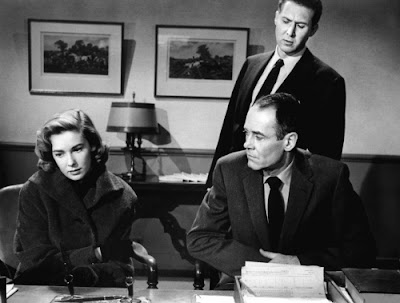
This is a fascinatingly odd film, one of the two listed Hitchcock films I hadn't seen before and very atypical of his more well-known works. It's the true story (Hitch tells us so himself in a prologue to the film) of New York musician Manny Balestrero who gets mistaken for an armed robber when he goes to the insurance office to borrow some money for his wife's dental work (apparently they think he'd be stupid enough to get a loan from a place he's previously robbed). What follows is part police procedural, part courtroom drama and part psychological melodrama as he struggles to clear his name and deal with the toll the whole ordeal takes on him and his family.


Henry Fonda as Balestrero is superb. The supporting cast are all good too, with Vera Miles as his flaky wife and Anthony Quayle as the attorney who defends him, but it's Fonda's film. His character is one we don't see much of in the cinema — an honest, unpretentious, hard working man. He's good to his wife and kids, doesn't drink and treats people with respect. Throughout his strange and terrifying ordeal — things happen that wouldn't look out of place in a Kafka novel — he maintains a quiet, stoic, dignity and we can't help but feel like we're there with him, privileged to be in his company.

The film is immaculately put together and has an almost documentary quality to it with many of the scenes playing out in real time to emphasise the agony that the wronged man is going through. The scenes of his arrest and questioning in particular are painfully slow and deliberate but utterly enthralling nonetheless. Yet it's still unquestionably a Hitchcock film, with many of his hallmark themes and styles and this leads to some interesting, though possibly unintended, tensions. We've all seen North by Northwest, Psycho and Rear Window and these have trained us with an almost Pavlovian instinct for the twists and surprises that we might expect. Consequently we wonder if Fonda is actually guilty, or if the police are setting him up, or if his wife's secret lover is trying to get him out of the picture. Or, if none of those, it must surely be something to do with the mother — it's usually the mother isn't it? And while we're second-guessing the master, he goes and springs the biggest surprise of them all because we suddenly remember that the whole crazy story is actually true.

If I'm ever sitting in a bar having a few drinks and a pretty girl comes up to me and claims that Vertigo is Hitchcock's greatest film I would, if I'm feeling in a contrary mood and up for some banter, argue that she's mistaken and that actually The Wrong Man is. It can match any of his other films for thrills and intrigue, it has one of the best performances by a Hitchcock leading man and, most importantly, it's completely real. There are no implausible plot turns, no over-scripted one-liners, no impossibly beautiful blondes who happen to cross the hero's path — just an extraordinary true story meticulously told. Of course, the next morning I'd admit over breakfast that I was talking a load of rubbish — it's in the top three at best. But that's still pretty good.

Tuesday, 22 March 2011

Two Marx Bros. Films

Shoving these two films together in one blog post is not just me being lazy. The Marx Bros.' films are really just a collection of sketches hanging by some loose threads of plot and so can just as easily be viewed as a single body of work rather than its individual pieces. Putting Duck Soup ahead of the others just means it has a few of the more funny scenes in it. You might equally put Queen's Greatest Hits I ahead of Greatest Hits II, not for reasons of narrative or theme but simply because it has better songs.

The two films on the list are quite good examples of their work, though. Duck Soup (no. 46) represents the Paramount years and is just incredibly silly. Groucho plays Rufus T. Firefly who for some not very clear reason is made the leader of the small nation of Freedonia. Chico and Harpo are spies from neighbouring Sylvania which is trying to take over but they don't do much spying and Groucho doesn't do much leading — they all just muck about for an hour and a half. There are some fantastic moments along the way, though. Groucho of course has some great lines, Chico and Harpo terrorise a poor street vendor and there's the famous mirror scene which is brilliantly put together. The final act as Sylvania invades is chaotic and crazy but very funny. Some critics write learnedly about how this is a satire on the absurdity of war, but they need to get their heads out of their arses and just enjoy it.

However, Duck Soup is not the best Marx Bros. film, because it's missing what I think is the highlight of most of their other works — this:


It's Chico playing the piano in A Night at the Opera and I don't think I could ever get bored of watching those fingers. Duck Soup doesn't have Harpo playing the harp either, which is also a terrible shame, but it's Chico's piano that I remember most fondly from all their other films and I wonder why it wasn't included.

After Duck Soup the brothers left Paramount and moved to MGM and A Night at the Opera (no. 112) was the first film at their new home. It marked a considerable change of pace from the previous films — much less anarchic and directionless. Where before the brothers attacked everybody equally and often for no good reason at all, now they had a purpose and only attacked the villains in order to help the central couple. Zeppo had left the group too (not a huge loss) and the film introduced non-comedic musical numbers to broaden the audience appeal. Surprisingly, this tinkering of the formula works. It might have gone wrong and left us with a watered-down version of the previous films, precision engineered by studio executives to make the most money, but that's not what happens. The film has a lot more heart and although it's still crazy in places at least it makes some sense.

The plot is still wafer thin, though. Groucho's trying to marry rich Margaret Dumont (as he does in several of their films, though it's hard to tell what she sees in him) but she has her interest in the opera. Chico and Harpo are helping Allan Jones with his career as a singer but they're left behind when the company heads off to New York and have to stow away on the ship. Naturally Groucho gets involved and the brothers work together to help Jones get his girl and his big break. It's pretty lame but works well enough and that's all you need. The holes in the plot are filled in with all the terrific set-pieces we'd expect: Groucho cramming about thirty people into his tiny cabin, the contract negotiation, the finale's acrobatics and of course Chico on the piano and Harpo on the harp. It's simple but sublime entertainment by some of the most talented performers of them all. It's not going to make you think — just smile. Thinking's overrated anyway.

An honourable mention should also go to A Day at the Races which really ought to sit up there with these two. It's very similar to A Night at the Opera, better in some respects and weaker in others. The stand out scene comes in the middle as Harpo leads the locals in a raucous and hugely entertaining swing number, with singing and Hellzapoppin-style lindy hoppers and a fat man doing the splits. Perfect. It also has this clip:


I've watched most of their other films too and while they all have plenty to offer and are well worth watching, they didn't quite reach the heights of A Night at the Opera or A Day at the Races. A bit like Queen's albums, really.

Thursday, 3 March 2011

27. Broken Blossoms

I guess the first thing I should do is tackle the 'R' word. Is Broken Blossoms racist? I think my answer is a cautious 'no', although I wouldn't argue too strongly with you if you disagreed. The main Chinese character seems intended to be one of the good guys and is largely treated sympathetically, and the use of un-PC language is just a sign of the times, but there are difficult barriers for modern audiences to overcome. The alternative title for the film is The Yellow Man and the Girl and the male lead is known only as Yellow Man. The white characters get proper names, but his is clearly of no importance. It's interesting that the Wikipedia article, embarrassed to use this name, refers to him as Cheng Huan which is a name they only deduced from the sign on his shop front. He's played by Richard Barthelmess, a white guy who's been yellowed up to look oriental, and his slitty-eyed approach to the part reminds you rather too much of Peter Sellers in one of his less funny moments. Not that any of this particularly bothered me — it's 1919 after all and a totally different world from now — but it's impossible to ignore. In this day and age, somebody who uses the word 'Chink' is either desperately unpleasant or trying to be funny and so it's hard not to either angrily switch off or laugh. I followed the latter path and have to admit I was chuckling throughout the film, which made it a bit hard to take seriously.

The second thing I need to get off my chest is the central relationship between Barthelmess and Lillian Gish. The girl, Lucy, seems to be about 14 although it's never made clear how old she is exactly. Gish was actually 26 at the time but she looks a lot younger and she's certainly not playing an adult. So when you get these scenes of Barthelmess gazing wistfully at the unhappy child walking along the street you can't help but think of the 'P' word. When they stare briefly at each other and he forces a smile he comes across very creepy and when he later moves in for a kiss you're thinking Nosferatu. Was this done on purpose? Did Griffith intend for the audience to be repulsed by the thought of a Chinese man with a Western woman?


It's very hard to judge a film on its artistic merits when you have a yellow-and-white minstrel paedophile as your main character. When the central 'romance' involves an adult grooming a child by giving her a doll and the child asking 'Why are you so good to me, Chinky?' you do have to wonder if this is really a film worth seeing. But let's try and ignore all this and settle down and look at the film on its merits. The story involves a Buddhist missionary who comes to London to spread the word of peace to the violent West. He winds up in Limehouse but is soon beaten down by the harshness of East End life. He takes up opium when he's depressed and his one pleasure is gazing adoringly at the sad little cockney waif, apparently because he can see her true inner beauty (but that's what they all say). She's the daughter of a prize-fighter — a gurning one-dimensional brute of a man — and lives in perpetual fear of his assaults. One day, after a nasty beating, she staggers to the shop of 'Cheng Huan' where she's looked after and shown affection for the first time in her life. It's all-in-all a pretty grim story.

There are good points about Broken Blossoms. The film captures the dirty atmosphere of post-WWI working class London very well and you do feel immersed in the period as you're watching. The boxing scene is a particular highlight, as is the infamous closet scene, and the whole film has this authentic grubby quality. The story is sad and quite poignant and carries some important messages that aren't out of date in today's world. There are also several negatives, though. The intertitles are numerous and rather annoying. They're poorly written with a laboured pseudo-poetic voice which jars from the grimy reality it's narrating. On a number of occasions they're just redundant, describing what we can plainly see happening on the screen. The acting isn't exactly subtle and often looks quite odd. The prize-fighter, Battling Burrows, is just a cartoon villain, sneering and clenching his fists and strutting about the room in a rage. Lillian Gish is good as the girl, although also rather over the top at times — the whole business of her forcing her lips to form a smile is much more irritating than heart-breaking. Barthelmess is more measured, but verging on dull. Of course, this is still the early days of cinema and the "rules" of screen acting hadn't been established yet, but that doesn't excuse it in my book. Interesting doesn't always mean good.

So film studies students will want to watch it and it will also appeal to those with an interest in Chinese-American relationships, as it does offer some insight into what was considered appropriate in 1919 Hollywood. But I really wouldn't recommend it to anyone else and it doesn't deserve the no. 27 spot. I'm glad I watched it and it's certainly an interesting work but it's simply not a good enough film to overcome the considerable obstacles it puts in front of itself.

You can watch it on archive.org.

Thursday, 10 February 2011

112. Late Spring

Yasujiro Ozu isn't really very good at naming his films. There's Late Spring, Early Summer, Late Summer, The End of Summer, An Autumn Afternoon and Spring Comes from the Ladies. To make things worse, The End of Summer is also known as Early Autumn and is listed here under that name. It all gets very confusing. Still, I did manage to not only notice that Late Spring was on one November weekday morning and associate it with the listed film I needed to see, but also to set my recorder to tape it. And I'm glad I did, because it's bloody marvellous.

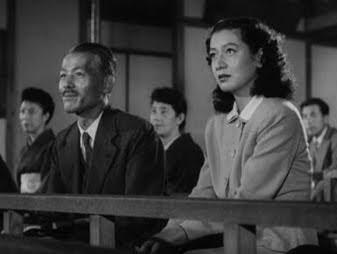
The film is as simple as it comes and is very low on any sort of action. A young woman lives with her father in postwar Japan (I guess it would have been American occupied then, but you don't see any Americans) and looks after him contentedly. There's a hint that she's slightly damaged from the war but nothing much is revealed there. She's not married so her father and aunt encourage her to find a husband, despite her reluctance. And that's basically it plotwise. There are some scenes at a bar and there's a long, almost hypnotic, sequence at a Noh performance, but mostly it's just dialogue, touchingly and honestly performed by the leads.


The actors are all magnificent. Setsuko Hara as Noriko, the daughter, is beautiful and her smile lights up the screen when her character is not having a strop. Chishu Ryu as the father is the star of the show: stately, wise but with a cheeky twinkle in his eye. The relationship between the two features no melodrama, no fireworks or loud destructive arguments — it's just real, sensitively and quietly observed to reflect true human behaviour. The supporting cast are good too but it's the central performances that carry it.

Ozu's direction is understated in the extreme and consists almost entirely of low static shots, as if he'd hired garden gnomes to be the cameramen. This is of course his trademark (this one film and Wikipedia has made me an authority on the subject) and it fits the material perfectly. It's really just a stage play with a few cuts to scenes of late spring, and certainly a case of less-is-more. Modern directors could learn something. The elisions are interesting too, and emphasise the importance of how and why events occur, not caring too much about the events themselves.

I suppose the best compliment I could make about this film is that I learned a lot from it. I'm fairly ignorant about postwar Japanese life and the emerging role of its women — I clearly didn't pay enough attention at school — and it opened a window into that previously unseen world. Late Spring is the first part of a trilogy — one of theme rather than narrative. Part two, Early Summer is not on this list but Tokyo Story, the final and most celebrated part, is. I'm going to have to watch them both, though.

Friday, 28 January 2011

43. Sunset Blvd.

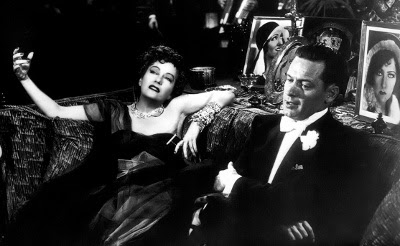
Sunset Blvd. — aka Sunset Boulevard, there seems to be some debate about what the actual title is — is one of the daddies of American cinema and it's a bit of a shocker that I'd not seen it until just before Christmas. It's the story of struggling screenwriter William Holden who stumbles into the house of silent film star Gloria Swanson, once a world famous idol but now a deluded has-been. He sticks around to help her with a screenplay she's written and gets entangled in her life as she prepares for a comeback.

Swanson as Norma Desmond is superb and rightly earns the plaudits but I think the best thing about the film is William Holden. His character is so perfectly balanced — charming, dryly witty and not untalented but also shallow, selfish and greedy. He's young, but world-weary, and he pities Swanson and doesn't return her affection. Generally embarrassed by his situation, he's nevertheless happy to take her money and live the opulent lifestyle. Not that he's a particularly bad person; he's merely weak. When he does try to do the honorable thing and return to his life of debt and happiness, he quickly gets dragged back to the house on Sunset Boulevard. His relationship with sweet innocent Nancy Olson is another highlight: unconventional, almost unromantic, but very nicely played.


In many ways the film plays out more like a horror than a drama. Norma Desmond's palace is haunted by ghosts of her long-dead career and nowhere is this more true than in the case of her creepy butler, a fascinatingly bizarre character with some interesting twists in his backstory. Desmond is the monster, though, ensnaring the young writer in her manipulative web and subjecting him to her Busby Berkeley bathing suit recreation. But, like all the best monsters, you do feel sorry for her. And of course there's the rather morbid device of killing off the leading man at the start and having him narrate the film in flashback from beyond the grave. An earlier cut actually had his body in the morgue chatting to other occupants.

The script is superb, and not just for all the famous oft-quoted lines*. The storyline is clever, brave, tight and scathing of its chief target, the Hollywood machine which uses people for as long as they're profitable and then discards and forgets them. I'm wondering if time has actually diminished its message, though. There have been so many of these anti-Hollywood movies made in the last 60 years that we've seen it all before and know full well what lies beneath the tinsel. But when it was first released this caused quite a stir and people were shocked that they would bite the hand that fed them. Still, even if the central message has been diluted a bit over the years the film that remains is still wonderfully cynical, brilliantly made and just a lot of fun.

Oh, and you get to hear Buster Keaton talk in one of several cameos by silent-era film makers. He's playing bridge and his only words are "Pass".


* I will say, though, that the "You used to be big." "I am big. It was the pictures that got small!" exchange confuses me. If it was the pictures that got small and she stayed the same size then, in proportion to the pictures, she would have got even bigger and by her logic would be an even bigger star.

Saturday, 11 December 2010

What a good idea!

If you like this blog, but want the list to be four times longer, the writer to know what he's talking about and articles that actually have some researched depth rather than short bursts of inane ill-informed rambling, then take a look at Shooting Down Pictures. The website's a bit of a mess but there is a heck of a lot of material on there so full props to Kevin Lee for an awesome job.

That said, I believe I do still have some things to offer my readers. I've not yet finished my list, so there are still plenty of articles to come (whether this is a good thing is up to you). My articles are short enough to be read on the toilet. And when you visit my blog it doesn't auto-play a Big Lebowski video every single bloody time.

220. A Matter of Life and Death

Definitely in the "should have seen it" camp, rather than "didn't know I should have seen it", this is one of those Sunday afternoon classics that's on quite a bit but I'd never managed to catch. David Niven (always brilliant) plays the RAF pilot who's due to die over the Channel but somehow the powers that be fail to drag him off to heaven and he survives. They realise their mistake a few hours later but in the mean time he's fallen in love with a radio operator and wants to appeal his death.

Or maybe not. I'll try again. David Niven (always brilliant) plays an RAF pilot who, after crashing his plane in the Channel, gets diagnosed with a life-threatening brain tumour. This causes him to hallucinate various conversations with a French fop who claims to be his guide to the after life. Initially skeptical, as the tumour develops he starts to believe this absurd story and has to decide on who to represent him in the trial.

The film is fantastic, of course. Perfectly played, well scripted, intelligent, with some brilliant ideas. It has enough romance to give the film heart but not so much as to make it sickly. There are some great random moments, such as the naked boy on the beach (why?). The heavenly scenes (in black and white, a clever flipping of the Wizard of Oz conceit) are imaginative and funny (and you even catch a glimpse of Richard Attenborough up there) and the earthbound scenes are comfortingly British in a Dad's Army sort of way.


If there is a false note in the film, it's probably the final act. Niven's case gets heard by a celestial court which, rather bizarrely, briefly turns into an Americans vs British slanging match. It's clearly trying to make some comment on Anglo-American relations at the time but it feels a bit tacked on. As if Powell and Pressburger had a great little fantasy romance ready to shoot but the government wanted to inject some of their post-war foreign policy into the mix. I'm quibbling, though.

Despite the above, the question I'm asking myself is: did I love it? I think I have to say no. I admire it, but I didn't get that feeling of awe or excitement from it. It's undoubtedly a well-made film but in the end it just didn't capture my imagination as much as plenty of lesser films have. Perhaps it's a little dated, perhaps it's a little familiar, I'm not really sure. Maybe it needs a second viewing, but it might be a while before I get round to it.

Tuesday, 16 November 2010

112. Un Chien Andalou

I hadn't seen this before, though I of course knew about the infamous eyeball scene. Often lauded as a masterpiece, it's a French/Spanish surrealist short film by Luis Buñuel and Salvador Dali but I'm not going to describe the film any more than that — watch it and you'll understand!


I have to say I'm seriously wondering if there's an Emperor's New Clothes thing going on here. Buñuel is a revered director (who made several highly regarded films surprisingly not on this list) and Dali is one of the most famous artists of the last century, so obviously this has to be a great film. After all, that's what film students the world over are told. So how come it seems to be total shit? Oh well, it must be my shortcomings as a film watcher because all those people can't be wrong. I don't want to look like a dick so I'll just pretend that it's actually awesome.

Except I'm more than happy to look like a dick, so here's an honest review.

The most interesting thing about it is probably the fact that it's utterly meaningless. And that's not me being stupid; the writers purposefully made it void of all symbolism, metaphor or interpretation. This means that any critic who claims to possess some deep understanding of it is an idiot. There's also no plot and I'm pretty sure there aren't any characters either — there are actors in common through the piece but they're just showroom dummies on which the director dresses his bizarre scenes. Just because the girl in the opening scene looks the same as the girl running away from the bloke tied to the pianos (sigh...) doesn't mean it's the same person any more than Jake Gittes is the same person as Jack Torrance. The whole thing is just really empty and pointless.

Don't put this down to surrealism-bashing. I'm not against the movement and it led to some excellent pieces of artwork. David Lynch's backwards-talking dwarf, for example, is one of the coolest scenes in all television and is undoubtedly "surreal". True surrealism tries to express the chaos of the mind and the trip into Dale Cooper's dream psyche is perfectly weird. Un Chien Andalou, by comparison, is just very tiresome. A load of random stuff happens but you don't care about any of it, can't find any meaning in it and it's not even particularly interesting from a purely visual perspective.

Watch Porky in Wackyland instead — a much better example of surrealist film.

Tuesday, 9 November 2010

37. Metropolis

I first saw this about 15 years ago when Channel 4 showed the colour-tinted Giorgio Moroder rock opera version, running at 80 minutes. I loved it of course, and didn't even mind the music despite the multiple Razzie nominations. Then a couple of weeks ago I went to the cinema to see the newly rediscovered and lovingly restored almost complete version: pure black and white with an authentic score and a whopping 150 minute running time. Some of the difference in time is technical (the Moroder version was run at a slightly faster speed and used subtitles instead of intertitles) but also there are a lot of previously lost scenes added. In fact, there are now only a couple of scenes missing from the film shown at the 1927 Berlin premiere and they mark these in this version with title cards explaining what should be happening.

In a word, it's awesome and a completely different experience to the first time I saw it. In fact, apart from the iconic scenes everybody knows, it's as if they're two different films. If you've seen Metropolis before and you enjoyed it you owe it to yourself to catch this re-release.


The Metropolis of the title is a sprawling futuristic city with a stark division between the rich thinkers who live in luxury in their ivory towers and the practically enslaved working class who live underground and make the city's machines tick. Both halves are magnificently depicted. Above we have the incredible soaring tower blocks, opulent night-spots and fantastical transport systems - all modelled on the New York of the 20's, itself a futuristic landscape for European eyes. Down below are the machines: enormous, complex and industrial with little or no automation and requiring hordes of oppressed workers to run. The whole thing, of course, is an allegory of Communism but this wasn't the film's strong point for me. In fact, the central thesis of the film — that "between the head and the hands lies the heart" — is a bit heavy-handed (not to mention nauseating) and really didn't need to be repeated throughout the film; there is such a thing as subtext, y'know. That said, this was 1927 and audiences hadn't yet been subjected to thousands of films on this subject so maybe I'm just jaded.

While the politics might not be especially inspired, the film more than makes up for it in sexy robots. Mad scientist Rotwang — who has more than a shade of Strangelove about him — creates the man-machine to replace his dead love and it takes on the appearance of Maria, the leader of an underground movement for better working conditions. With Maria out of the way, the evil doppelgänger actually encourages the workers to rise up so that the city boss has an excuse to kill them off and replace them with an army of robots. It's not quite that simple, though, as Rotwang plans to double-cross him and his son has grown a conscience and rebels (mostly because he's trying to pull Maria).


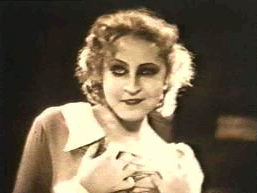
Brigitte Helm is probably the best thing about the film. It's an incredible performance: virginal and strong as Maria; deranged and sexy as hell as the robot. I can't have been the only person in the audience who preferred the evil version, though, erotically writhing around with those maniacal eyes. It is actually surprisingly risqué, not that I was complaining. Evil Maria does like to touch herself and even in metal form she's built for sex appeal. And that dance, phew! I've read that Fritz Lang (the director) was a bit of a tyrant and that the shoot was hell for many of the cast, especially Helm, but it clearly got the best out of her.

The film is chock full of iconic scenes: the transformation scene, obviously; Freder at the clock (but lord knows what mechanism he's actually working there); the children fleeing the rising flood waters; Rotwang chasing Maria through the pitch-black tunnels; and of course those amazing Futurama cityscapes. It's exciting and intelligent and massively influential to not only science fiction film makers. Perhaps in another 15 years they'll have discovered the last missing pieces in some cave in Afghanistan and I'll go and see it again.